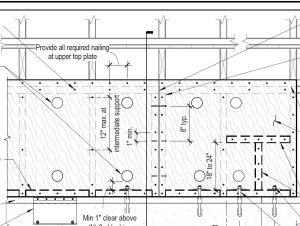
TOP PLATE NAILING IN FEMA P-1100 WITH SOME EXTRA NAILS IN THE LOWER TOP PLATE THAT DON’T HURT ANYTHING
Here I look at the history of plywood nailing from the 1997 Uniform Code for Building Conservation to the newest residential seismic retrofit Guideline ICC 1300 Vulnerability Based Seismic Assessment and Retrofit of One- and Two-Story Dwellings. This took weeks of research to come to the simple conclusion that you will find at the end of this page and the end of this video. I can’t imagine anyone watching the entire video unless you are a retrofit propeller-head as I am.
Here I look at an often-overlooked top plate connection that is a very important part of every seismic retrofit and should never be ignored.
Exclusive Upper Top Plate Nailing Is Found in:
- CEBC:
- LADBS Plan Set 1
- Special Design Provisions for Wind and Seismic
- Simpson Strong-Tie Plan Set
- City of Seattle Guidelines
- Portland Guidelines
- American Plywood Association Shear Wall Details
Nails In the Lower and Upper Top Plates Are Found in:
- Standard Plan A
- FEMA DR-4193-RA2
Here I look at the history of plywood nailing from the 1997 Uniform Code for Building Conservation to the newest residential seismic retrofit Guideline ICC 1300 Vulnerability Based Seismic Assessment and Retrofit of One- and Two-Story Dwellings. This took weeks of research to come to the simple conclusion that you will find at the end of this page and the end of this video. I can’t imagine anyone watching the entire video unless you are a retrofit propeller-head as I am.
Here I look at an often-overlooked top plate connection that is a very important part of every seismic retrofit and should never be ignored.
In the credits, at the beginning of this plan set it admits much of the material contained therein came from Standard Plan A.
Nails Exclusively in The Lower Top Plate:
- CUREE Publication W-17, Page 19 Figure 1.7
This detail is contrary to 25 years of precedents established by multiple jurisdictions. If the standard is to be accepted, its use must be justified by both engineering theory and empirical evidence. Including this detail is essentially telling jurisdictions that may have followed the 5 guidelines and the SDPWS for years, that they had it wrong the whole time. There will be a lot of resistance to using this detail in particular, and the entire standard in general, unless this and other details peculiar to the standard can be fully justified.
Be Sure and Look at The Images Below.

NAILS IN UPPER TOP PLATE ONLY
Nails Only in The Top Plate in Figure 7, American Plywood Association Introduction to Lateral Design

NAILS IN UPPER TOP PLATE ONLY
Nails In the Upper 2 x 4 plate: American Plywood Association, Figure 4, Building for High Wind Resistance in Light-Frame Wood Construction

NAILS IN UPPER TOP PLATE ONLY
Single Row of Nails in The Upper Top Plate: 1997 Uniform Code For
Building Conservation And The International Existing Building Code
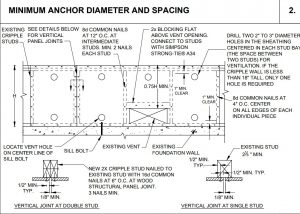
NAILS IN UPPER TOP PLATE ONLY
Another Single Row of Nails in The Simpson Plan Set
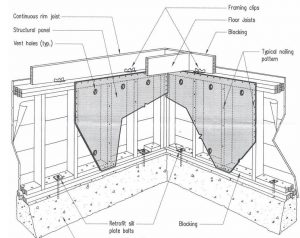
NAILS IN UPPER TOP PLATE ONLY
More of the same: Seattle Plan Guidelines
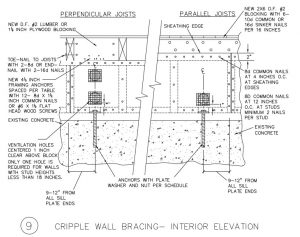
NAILS IN UPPER TOP PLATE ONLY
Again, More of the Same: Portland Guidelines
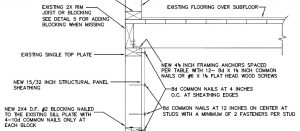
NAILS IN UPPER AND TOP PLATES
More Upper Top Plate Nailing in LADBS Plan Set
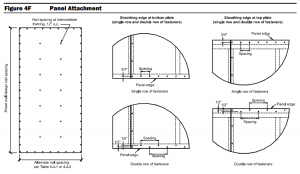
NAILS IN UPPER TOP PLATE ONLY
Upper Top Plate Nailing: Special Design Provisions for Wind and Seismic
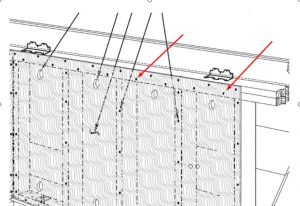
NAILS IN UPPER AND TOP PLATES
Oops! Upper and Lower Top Plate Nailing: Standard Plan A
I was on the committee that created Standard Plan A and until it was revised in 2008 it used upper top plate nailing exclusively.
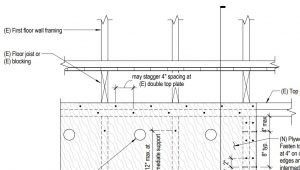
NAILS IN UPPER AND LOWER TOP PLATES
The Influence of Standard Plan A- Upper and Lower Top Plate Nailing: FEMA DR-4193-RA2

EXCLUSIVE LOWER TOP PLATE NAILING. THIS IS FROM A 6 MILLION DOLLAR FEMA FUNDED PROJECT GIVEN TO UNIVERSITY PROFESSORS WHO HAD NO IDEA WHAT THEY WERE DOING. NEVER TRUSY A Ph.D TO DESIGN YOUR RETROFIT.
Exclusive Lower Top Plate Nailing: CUREE W-17, Page 93, Fig 1.7
This webpage is for educational purposes only.
FAIR USE
Copyright Disclaimer under section 107 of the Copyright Act of 1976, allowance is made for “fair use” for purposes such as criticism, comment, news reporting, teaching, scholarship, education and research. Fair use is a use permitted by copyright statute that might otherwise be infringing.
FAIR USE DEFINITION
Fair use is a doctrine in United States copyright law that allows limited use of copyrighted material without requiring permission from the rights holders, such as commentary, criticism, news reporting, research, teaching or scholarship.
Everything expressed here is solely the views of the author. Any opinions, findings, conclusions, or recommendations expressed in this video do not necessarily reflect the views of the Federal Emergency Management Agency (FEMA), the Applied Technology Council, or the International Code Council.


